
A playwright handed me his notes about testicular cancer and said: do whatever you want with it. So I turned it into a comedy. Then I ran a marathon. Then I played football in a park with strangers. This is how a story about losing a testicle became the most honest thing I’ve ever made.
The consultant said the word “cancer” and my first thought was: that’s not how they say it on telly.
On telly, there’s a pause. A meaningful look. Perhaps a hand placed gently on a forearm. In real life, it came sandwiched between a description of ultrasound findings and a question about whether I had any allergies. Mundane. Clinical. Like being told your MOT had flagged an advisory on the rear nearside tyre, except the tyre was a testicle and the advisory was malignancy.
Except it wasn’t my testicle. Not originally. It was Brian Lobel’s.
Let me explain.
Someone else’s Bollocks
Brian Lobel is a performance artist, writer, and academic. At twenty years old, he was diagnosed with testicular cancer. He survived. He wrote about it. Not in the way you’d expect: not the hushed, reverential, “brave journey” narrative that we’ve all been conditioned to receive with a solemn nod and a sympathetic head-tilt. Brian wrote about it with the gallows humour of a young man whose body had betrayed him in the most absurd way possible. He wrote about fear, yes. But also about the comedy of hospital gowns, the indignity of examinations, the bizarre social interactions that happen when people discover you have cancer and suddenly don’t know how to talk to you.
Brian’s notes were raw, funny, uncomfortable, and deeply human. And then he handed them to me.
Complete creative freedom. No restrictions. Take this story and make it yours.
I remember reading through his material for the first time, sat in my kitchen with a cup of tea going cold. There was a line about a nurse asking him to cough while cupping his testicle, and his internal monologue about whether this counted as a sexual experience. I laughed so hard I spilled the tea. And then I felt guilty for laughing. And then I realised: that guilt, that tension between the laugh and the wince, was exactly what this show needed to be about.
The Permission
Here’s the thing about cancer stories: we’ve been taught there’s only one acceptable version. The Inspirational Survivor. Capital I, capital S. You get diagnosed. You fight bravely. You lose your hair. You ring a bell. You appear on a morning chat show looking radiant and grateful. You write a book called something like Dancing in the Rain or The Light Beyond. Everyone cries. Everyone feels uplifted. Everyone goes home and forgets about it until the next awareness month.
I didn’t want to make that show. Brian didn’t want me to make that show. What we both understood, instinctively, was that the real cancer experience is messier, funnier, more awkward, more boring, more terrifying, and more absurd than the approved narrative allows.
So I gave myself permission to be inappropriate. Not cruel. Not dismissive. Not making light of something that kills people. But inappropriate in the way that real humans are inappropriate when they’re scared. When they’re trying to process something too big for their usual emotional vocabulary. When the only available response to existential dread is a dick joke.
Because let’s be honest: it’s testicular cancer. The material writes itself. And if you can’t find the comedy in twenty-year-old man losing a bollock, you’re not looking hard enough. Or you’re looking too hard. One of the two.
Building the Show
I took Brian’s notes and I dismantled them. Kept the bones, rebuilt the flesh. The show became a series of comedic monologues, each one a window into a different moment on the journey: diagnosis, treatment, recovery, and the strange afterlife of being a “survivor” in a world that wants you to perform gratitude on demand.
The structure was deliberately episodic. Like flicking through someone’s diary, except the diary belongs to a man who processes trauma through punchlines. Each monologue had its own tone, its own rhythm. Some were fast and frantic, riding the energy of panic. Others were slower, more reflective, landing in the quiet spaces where humour runs out and you’re left with just a bloke, alone, scared.
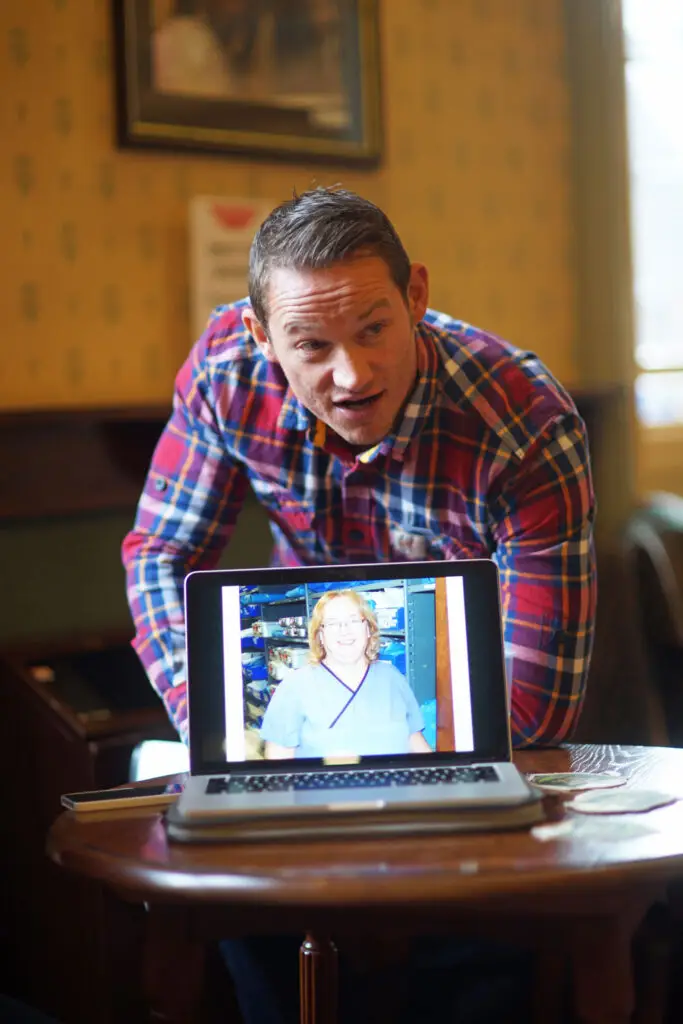
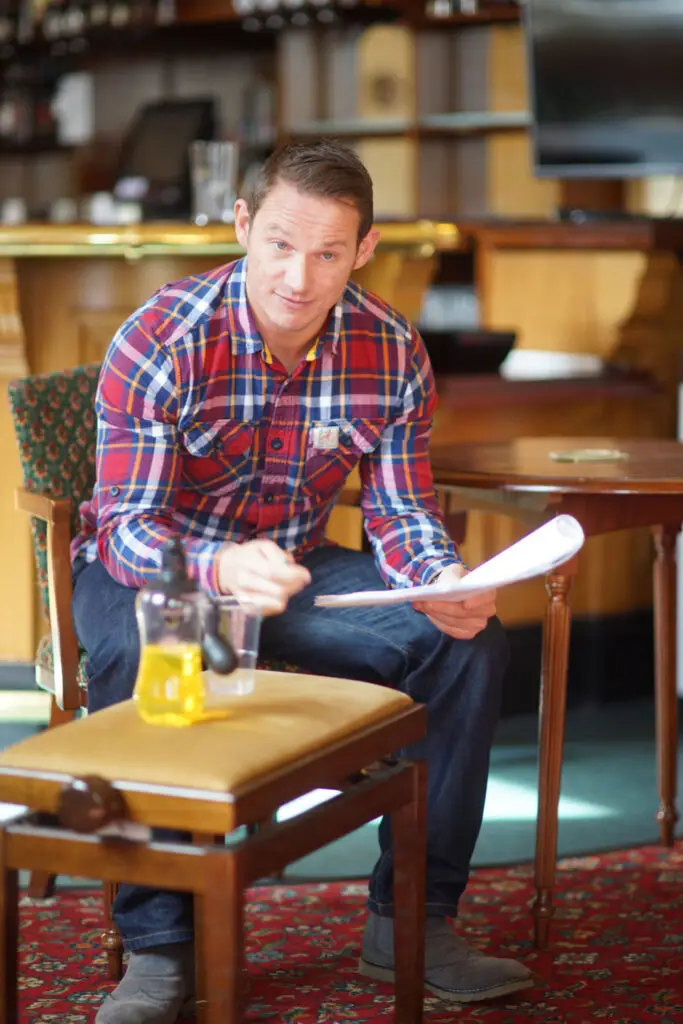
I wrote it like I write everything: in short, obsessive bursts, usually late at night, usually with a drink, usually deleting half of it the next morning. The Lost Boys had taught me discipline over the years, so I applied the same rigour I’d learned from our Thursday-evening-to-last-orders sessions. Draft after draft. Read aloud. Cut. Reshape. Find the rhythm.
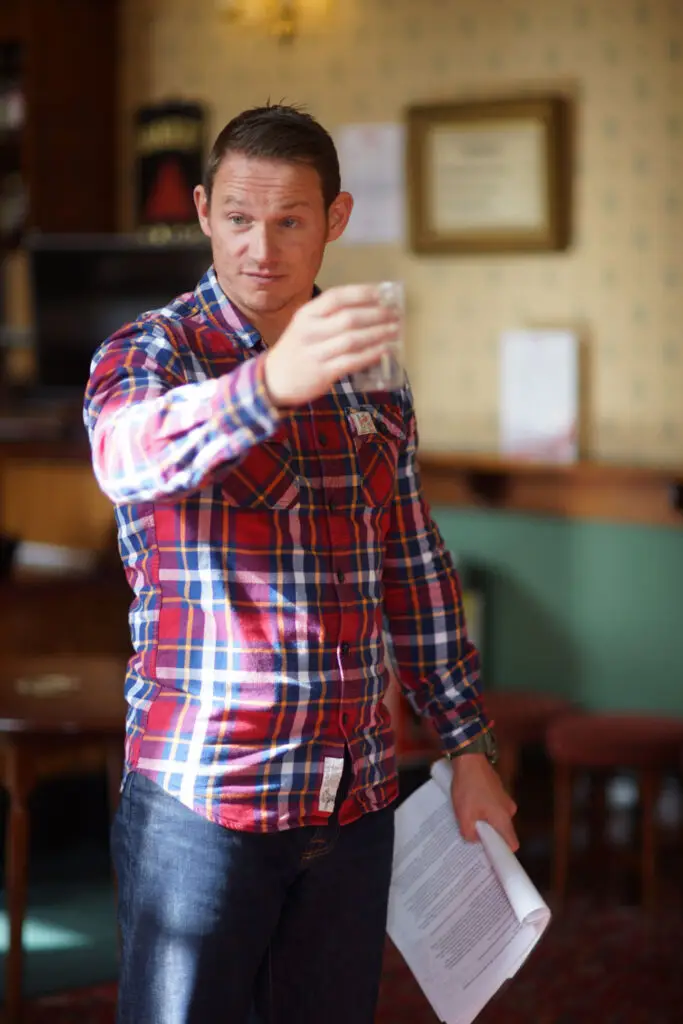
The hardest part wasn’t writing the funny bits. The hardest part was earning the serious ones. If you’re going to spend forty-five minutes making an audience laugh about cancer, you’d better make sure that when you finally stop being funny, the silence hits like a truck. The comedy is the setup. The honesty is the punchline. Playing Ball.
We called it Paul’s Ball. Singular. For obvious reasons.
But the title wasn’t just a gag. It became a mission statement. Ball. Play. Game. Sport. Movement. Action. The opposite of sitting passively in a hospital waiting room. The opposite of being a patient.
Alongside the show, The Lost Boys and I took to the field. Literally. We organised ball games in parks, public spaces, anywhere people would join in. Football, cricket, rounders, dodgeball. Stupid, joyful, sweaty, pointless games with strangers who’d come for the laughs and stayed for the community.
The first run of the production was staged as part of Stand Up To Cancer. We played, we performed, we raised funds. The connection between the show and the games wasn’t forced: both were about reclaiming the body. About saying: this thing that betrayed you, this body that grew something malignant, is also capable of joy. Of silliness. Of kicking a ball badly in a park while laughing.
There’s a photograph somewhere of me mid-match, red-faced, clearly losing, grinning like an idiot. That image captures the spirit of the project better than any poster or programme note ever could.
26.2 Miles of Stupid
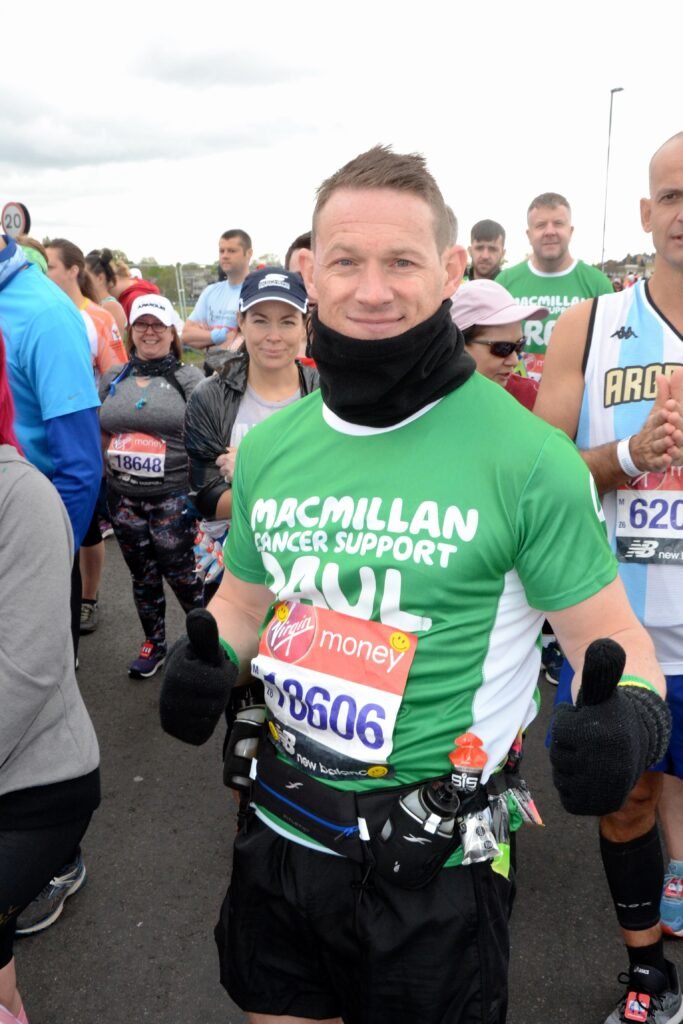
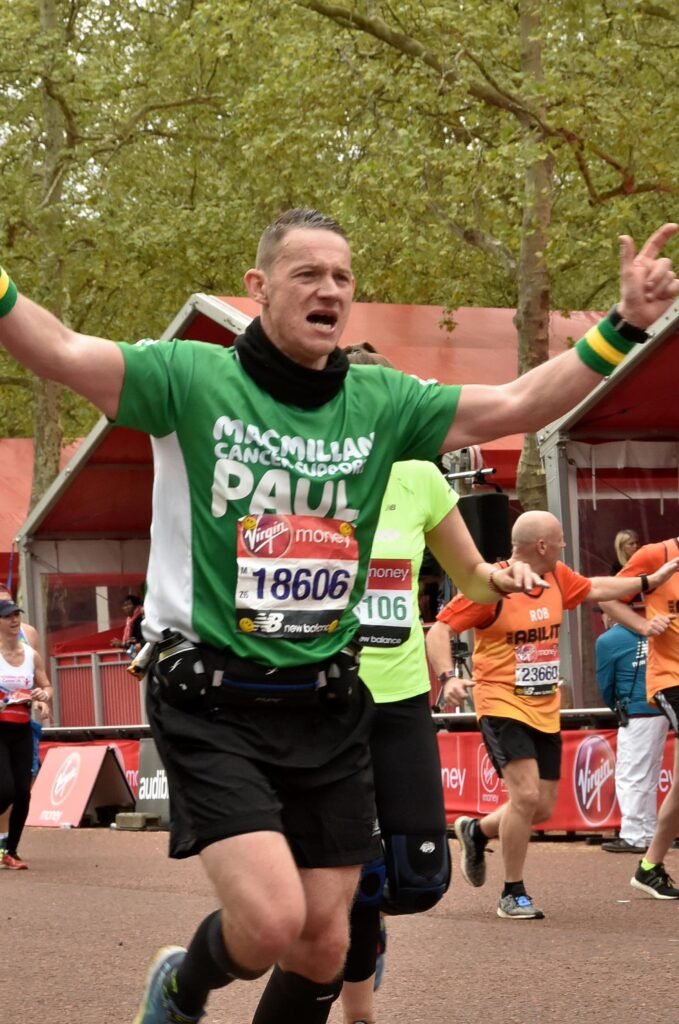
And then, because apparently I hadn’t punished my body enough in the name of art, I ran the London Marathon.
I am not a runner. Let me be clear about this. I am a theatre-maker who cycles and rucks and occasionally swims in cold water while questioning his life choices. Running twenty-six miles through London was not a natural extension of my skillset. It was a deliberate act of self-imposed suffering in service of a cause. I ran for Macmillan Cancer Support. The fundraising target felt ambitious. The final total was nearly four thousand pounds. Four thousand pounds raised by a man who had to stop three times to be sick and once to have a very serious conversation with his own knees about whether they intended to continue participating.
The marathon was its own kind of performance. Twenty-six miles of internal monologue. Twenty-six miles of negotiating with a body that wanted very much to stop. The parallels with the show were obvious, almost too neat: here’s a body, pushed to its limits, finding reserves it didn’t know it had, choosing to keep going not because it’s easy or fun but because stopping would mean the story doesn’t get told.
I crossed the finish line looking like a man who’d been dragged through a hedge backwards by a malevolent horse. People around me cried, other runners shed tears and wimpered with whatever reserves of energy they had left. I wanted to cry, not because I was moved ( although I was), but because everything hurt and crying seemed like the only remaining bodily function that didn’t cause additional pain. Sadly my tear ducts were dry, I supposed that was due to my state of dehydration and decrepitude.
Nearly four grand for Macmillan. Worth every blister.
The Audience Problem
Here’s what nobody tells you about making a comedy show about cancer: people don’t know if they’re allowed to laugh.
You can feel it in the room. The first joke lands and there’s this collective intake of breath. A nervous giggle from somewhere near the back. People looking at each other, checking: is this okay? Are we allowed? Is he going to be offended if we find this funny?
And then someone laughs properly. A real, unguarded, snorting laugh. And the room exhales. Permission granted. And from that moment, they’re with you. They’re in it. They’re laughing at the absurdity because you’ve shown them it’s safe to do so, and the laughter isn’t disrespectful, it’s the most human response possible. That moment, in every performance, is my favourite. The crack in the dam. The point where an audience stops being polite and starts being real.
Because the truth is: people who’ve had cancer laugh about it. People who’ve lost someone to cancer laugh about it. Not because it’s funny. Because laughter is how we survive things that are too big for tears alone. And anyone who tells you otherwise has never sat in a chemo ward and heard the jokes that get traded between patients. Those jokes are filthy. Those jokes are magnificent. Those jokes are medicine.
What it Taught Me
Paul’s Ball was the first time I made something entirely from vulnerability. The Lost Boys taught me craft. ANIMATE taught me community. Ancestories taught me identity. But Paul’s Ball taught me that the most powerful thing you can do on stage is stand there, exposed, and tell the truth in a way that makes people laugh before they realise they’re crying.
It taught me that cancer doesn’t have to be a tragedy. It can be a comedy. A farce. A love story. A sports day. A marathon. A ball game in the park. It can be whatever the person living it decides it is, and nobody else gets to dictate the genre.
It taught me that Brian Lobel’s generosity in handing over his story was an act of extraordinary trust, and that the best way to honour someone’s experience is not to treat it as sacred and untouchable, but to grab it with both hands and make something alive from it.
And it taught me that running a marathon is a terrible idea and I should never do it again.
Still Playing
Paul’s Ball sits in my body of work as something singular. It’s the show where I stopped hiding behind characters and adaptations and stood in front of an audience as myself, telling a story that was simultaneously mine and not mine, real and performed, funny and devastating.
The Lost Boys continue. ANIMATE grows. New projects are in development. But Paul’s Ball remains the one people ask about most. The one that made strangers approach me after shows to tell me about their own diagnoses, their own surgeries, their own moments of absurd comedy in the face of the unthinkable. Every single one of those conversations was a privilege.
Cancer is not a gift. Let’s be absolutely clear about that. It’s not a blessing in disguise. It’s not something that happens for a reason. It’s cells doing something they shouldn’t, in a body that deserved better. But the stories that emerge from it, the laughter, the community, the four thousand pounds raised by a man who can barely run for a bus: those are worth telling.
One ball. One man. One ridiculous, honest, inappropriate, salacious, open, real story.
And yes, the title is a dick joke. Of course it is. What else would it be?

Matt McGuinness, Director of Furthest From The Sea
Input your search keywords and press Enter.